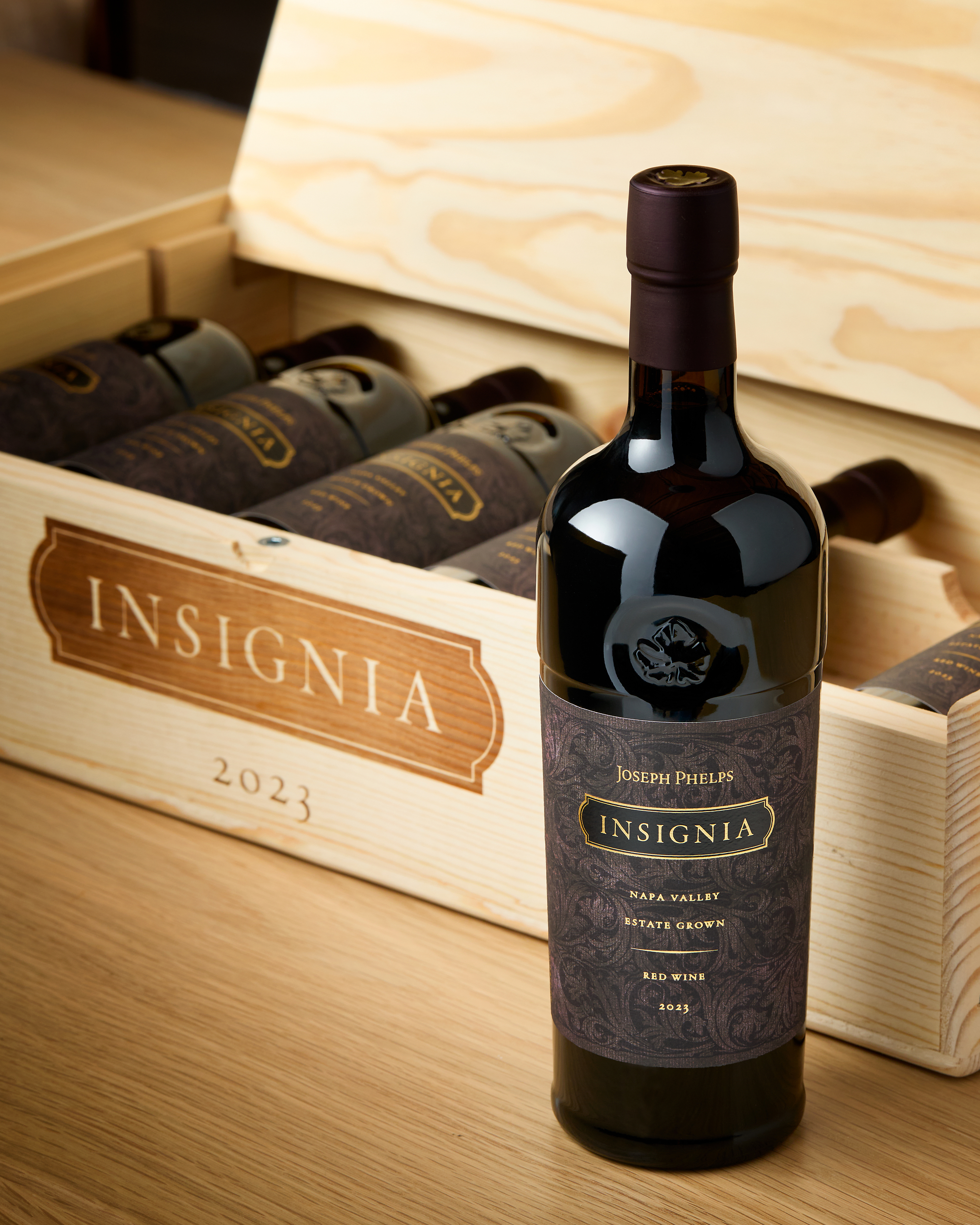
The 2023 vintage of Joseph Phelps Vineyards' flagship Insignia blend hit direct-to-consumer channels September 1 and lands in select restaurants and fine wine retailers October 1 at a $365 suggested retail price — a meaningful number for beverage directors pricing premium Napa Cabernet in a competitive by-the-glass and bottle-list environment.
This release carries more weight than a routine vintage drop. It is the first Insignia produced under Senior Director of Winemaking Ryan Knoth, the fourth winemaker in the winery's 51-year history, and the first under full Moët Hennessy ownership following the 2022 acquisition. For on-premise buyers, that combination — new creative direction plus LVMH distribution muscle — signals both continuity of a storied SKU and potentially stronger trade support infrastructure going forward.
The Blend and the Vineyards
The 2023 Insignia is 88% Cabernet Sauvignon, 7% Petit Verdot, and 5% Cabernet Franc, drawing fruit from seven estate vineyards across six Napa Valley American Viticulture Areas — Oak Knoll, Rutherford, Stags Leap, St. Helena, and the broader Napa Valley AVA. Knoth, a biochemist by training with 15 years of winemaking and viticulture experience, described the blend as honoring the freshness and tension characteristic of the winery's earliest vintages while delivering immediate approachability alongside age-worthiness. For sommeliers building cellar programs, that profile positions the 2023 as both a current pour and a longer hold.
What Moët Hennessy Ownership Changes
Beyond winemaking, the Moët Hennessy partnership is funding a multi-year agroecology initiative across Joseph Phelps' approximately 425 Napa Valley estate acres and 100 Sonoma Coast acres near Freestone. The program includes minimal tillage, native plant reintroduction, and biodiversity restoration — farming practices that increasingly appear on the evaluation criteria of sustainability-conscious hotel and fine dining procurement teams. As on-premise buyers face pressure from guests and ownership groups to demonstrate supply-chain responsibility, a $365 bottle backed by a credible, institutionally resourced sustainability program carries a different conversation than one without it.
For beverage program operators, the channel sequencing also matters: DTC launched first, with trade access following a full month later on October 1. That stagger reflects a broader luxury wine trend of prioritizing direct consumer relationships before wholesale, which affects how quickly allocations flow to restaurant accounts and how buyers should time their purchase orders with their distributor reps.
Operator Takeaways
- The 2023 Insignia carries a $365 SRP; operators should model bottle-list pricing and margin expectations before allocations arrive October 1.
- Moët Hennessy's distribution network will likely increase Insignia's on-premise availability and trade marketing support compared to pre-acquisition years — worth a conversation with your rep.
- The agroecology initiative gives beverage directors a concrete sustainability story to attach to the SKU, relevant for hotel F&B programs with ESG reporting requirements.
- Knoth's biochemist background and focus on blending precision signals a stylistic consistency play, not a dramatic departure — low risk for cellar programs already holding prior Insignia vintages.
- DTC launched September 1; trade accounts open October 1, so operators sourcing early allocations should act at channel open rather than waiting for broader availability.
Written by Michael Politz, Author of Guide to Restaurant Success: The Proven Process for Starting Any Restaurant Business From Scratch to Success (ISBN: 978-1-119-66896-1), Founder of Food & Beverage Magazine, the leading online magazine and resource in the industry. Designer of the Bluetooth logo and recognized in Entrepreneur Magazine's "Top 40 Under 40" for founding American Wholesale Floral, Politz is also the Co-founder of the Proof Awards and the CPG Awards and a partner in numerous consumer brands across the food and beverage sector.