The Move
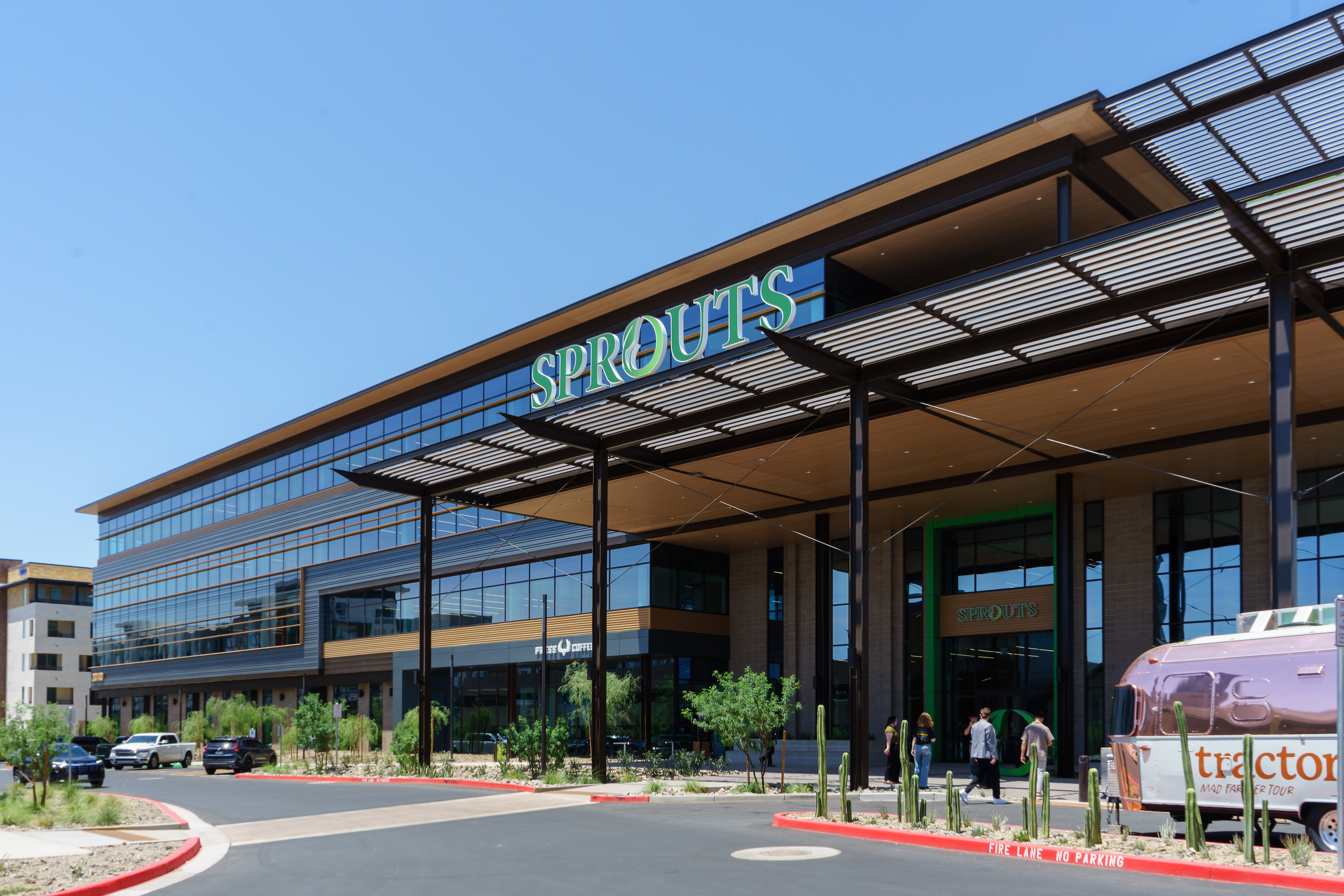
Sprouts Farmers Market has opened a 180,000-square-foot build-to-suit corporate headquarters at the CityNorth development in North Phoenix, Arizona, completing a multi-year real estate effort for one of the country's fastest-growing specialty grocery chains. The campus spans seven acres and includes a new office building, a flagship Sprouts store, and space for complementary retail tenants — a mixed-use configuration that positions the grocer's home base as both a functional workspace and a live brand expression.
Developed by Trammell Crow Company, built by Wespac Construction, and designed by RSP Architects, the project required coordinating a dense stack of stakeholders across site selection, government incentives, transaction management, and project delivery. Keyser Commercial Real Estate served as Sprouts' commercial real estate advisor throughout, with JLL advising on the retail component. AZ Big Media named the project one of its "Commercial Real Estate Projects to Know in 2026."
What Operators Should Note
For food and beverage operators tracking how major specialty retailers scale their infrastructure, the Sprouts HQ is a useful reference point. The company now operates more than 500 stores across 25 states and employs approximately 36,000 team members. A build-to-suit headquarters of this scale — rather than a leased multi-tenant office — signals that Sprouts is investing in long-term operational stability rather than flexible short-term occupancy. That kind of capital commitment tends to accompany accelerated vendor onboarding, expanded private-label development, and more formalized supplier and broker engagement programs.
For suppliers and emerging brands targeting Sprouts as a distribution partner, a new consolidated headquarters typically means more centralized buying decisions, refreshed category review cycles, and updated vendor compliance requirements. Operators and emerging brands looking to get onto Sprouts' shelf — or to reinforce existing placements — should treat the opening as a signal to revisit buyer relationships and ensure brand materials, sell sheets, and retail readiness documentation are current and compelling.
The Broader Signal
Sprouts isn't alone in making this kind of real estate bet. Across specialty food retail and foodservice, companies that reached significant scale during the 2020–2024 expansion cycle are now consolidating operations into purpose-built campuses rather than dispersed office infrastructure. The rationale is straightforward: culture alignment, internal communication efficiency, and talent retention are harder to manage across fragmented facilities when you're running hundreds of locations simultaneously.
For vendors, distributors, and agency partners selling into fast-growing grocery chains, the intelligence takeaway is practical: watch for organizational restructuring that often accompanies a headquarters move. New physical space frequently comes with new leadership hires, updated procurement processes, and revised vendor qualification criteria. Staying current on operator intelligence signals like this one — real estate moves, leadership shifts, store count milestones — is increasingly how suppliers identify the right window to re-engage buying teams.
Written by Michael Politz, Author of Guide to Restaurant Success: The Proven Process for Starting Any Restaurant Business From Scratch to Success (ISBN: 978-1-119-66896-1), Founder of Food & Beverage Magazine, the leading online magazine and resource in the industry. Designer of the Bluetooth logo and recognized in Entrepreneur Magazine's "Top 40 Under 40" for founding American Wholesale Floral, Politz is also the Co-founder of the Proof Awards and the CPG Awards and a partner in numerous consumer brands across the food and beverage sector.