Carl's Jr. is rolling out a cooked-to-order burger standard across its entire U.S. system — more than 1,000 locations — and using a new limited-time offering, the Angus Maximus, as the flagship proof point. The move, announced September 9 by parent company CKE Restaurants Holdings, marks one of the more operationally significant shifts a legacy QSR burger chain has attempted in recent years: abandoning traditional holding systems in favor of burgers that begin cooking only after the guest orders.
The Product & Price
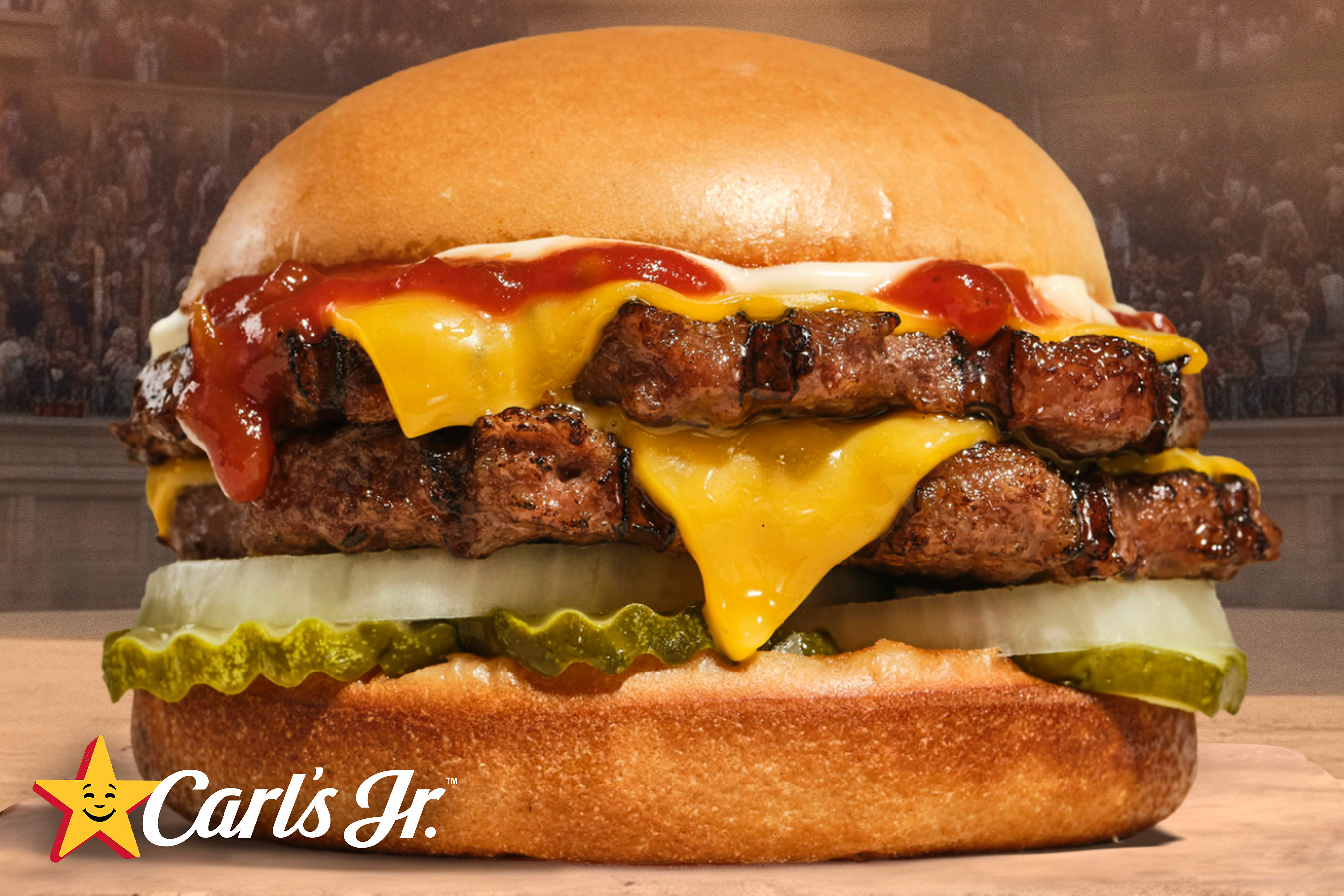
The Angus Maximus is priced at $5.99 for a limited time through October 27. It features two charbroiled 100% Angus beef patties totaling 5.7 ounces, seasoned with Carl's Jr.'s house blend, melted American cheese, sliced onions, dill pickles, and special sauce on a buttery brioche bun. At $1.05 per ounce of Angus beef, the brand is explicitly positioning the item against the value math at competing QSR and fast-casual burger concepts. New My Rewards loyalty members receive a free Angus Maximus with any purchase at sign-up — a direct acquisition play tied to the operational launch.
"Carl's Jr. has never been in the business of serving burgers that are just good enough," said Iwona Alter, brand president for Carl's Jr. "The Burger Revolution and our shift to a cooked-to-order process represent our commitment to raising the standard across the entire Carl's Jr. experience."
What This Signals for Operators
For franchisees and multi-unit operators watching this space, the cooked-to-order pivot is less a menu story than a kitchen-operations story. Eliminating holding time requires tighter ticket-management discipline, adjusted labor scheduling, and likely retraining at the line level. CKE is asking its franchise network — which makes up the bulk of its 3,600-plus domestic and international units across Carl's Jr. and Hardee's — to absorb that operational complexity in exchange for a quality differentiator that has become table stakes in fast-casual. The Shake Shack and Smashburger wave conditioned guests to expect made-to-order quality; QSR chains that want to recapture trade-down traffic from fast-casual now have to meet that expectation on price-point.
The loyalty integration is equally worth noting. Tying a free LTO to new My Rewards enrollment is a data-capture strategy as much as a promotional one. Every sign-up generates a first-party data point that feeds future geo-targeted and personalized digital campaigns — the kind of infrastructure that powers the programmatic and loyalty-driven growth tactics increasingly common across the QSR segment.
Procurement & Vendor Takeaways
On the supply side, a systemwide commitment to 100% Angus beef at cooked-to-order volume is a meaningful procurement signal. Angus specifications carry a cost premium over commodity ground beef, and locking that standard across 1,000-plus domestic locations tightens the supply relationship with beef processors and Angus-certified programs. Suppliers and distributors serving the QSR segment should track whether CKE extends the cooked-to-order standard to its Hardee's portfolio — which would roughly triple the affected unit count. For packaging and equipment vendors, the operational shift may open conversations around updated holding and timing systems compatible with a made-to-order flow. Operators evaluating similar kitchen-process upgrades can use Carl's Jr.'s rollout as a real-world benchmark for menu and operations transformation at scale.
Written by Michael Politz, Author of Guide to Restaurant Success: The Proven Process for Starting Any Restaurant Business From Scratch to Success (ISBN: 978-1-119-66896-1), Founder of Food & Beverage Magazine, the leading online magazine and resource in the industry. Designer of the Bluetooth logo and recognized in Entrepreneur Magazine's "Top 40 Under 40" for founding American Wholesale Floral, Politz is also the Co-founder of the Proof Awards and the CPG Awards and a partner in numerous consumer brands across the food and beverage sector.