The Strategic Signal
wagamama USA is not running a seasonal menu refresh. The pan-Asian casual dining brand this week introduced 26 new dishes, 15 Asian-inspired beverages, two new proprietary cocktail platforms, and entirely new menu categories — the largest single menu evolution in its U.S. history. The rollout is timed to a broader operational repositioning: new leadership under CEO Stephen Judge, a relocated U.S. headquarters in Tampa, and a remodeled flagship restaurant that now includes a dedicated bar and private dining space.
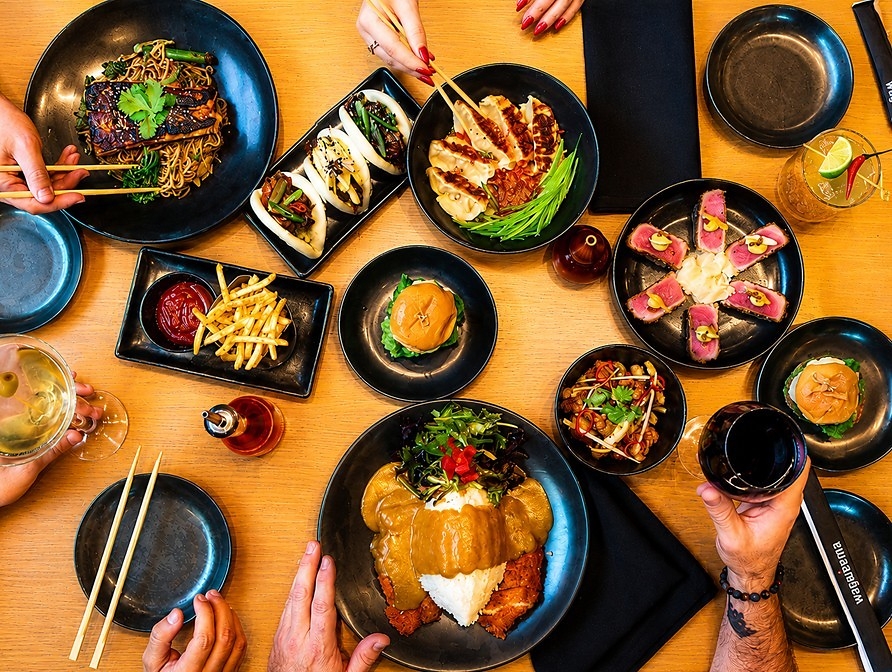
For operators watching category dynamics in casual dining, the move is notable less for the dish count and more for what it signals about where wagamama is placing its growth bets. The brand is doubling down on experiential formats — build-your-own ramen, bao bun tacos, customizable salads — that map directly to the personalization trend driving traffic in fast-casual and upscale-casual segments alike. The beverage program, which now includes proprietary cocktail lines branded as Wagaritas® and Wagatinis®, plus a four-SKU non-alcoholic cocktail menu, positions the brand to compete for happy hour and late-night dayparts it was not previously capturing at scale.
What the Menu Build Tells Buyers
The architecture of this menu update carries procurement and vendor intelligence worth tracking. New proteins include Korean BBQ preparations, Wagyu-inspired sliders, Ahi tuna poke, and Thai chili shrimp — a mix that reflects both the premiumization of protein in casual dining and the continued consumer appetite for Asian flavor profiles across multiple formats. On the dessert side, the addition of globally-inflected items like Apple Pie and Cinnamon Potstickers, Banana Egg Rolls, and Asian-sourced ice cream flavors (Red Bean, Mango, Coconut) suggests wagamama is sourcing ingredient stories as deliberately as it's engineering flavor profiles.
The beverage build is equally intentional. The La Colombe hot coffee partnership and Tea Forte curated collection — both named in the program — indicate wagamama is using branded ingredient partnerships to elevate perceived quality at the table. For suppliers and distributors in the beverage and specialty ingredient space, this is a brand signaling it will be an active, differentiated buyer rather than a commodity spec operator. See related coverage on how restaurant brands are structuring branded ingredient partnerships and beverage program trends reshaping casual dining menus.
Repositioning in a Crowded Segment
wagamama's U.S. footprint remains modest relative to its global presence, which makes this menu investment function more like a brand launch than a menu cycle. Tampa as the new U.S. HQ is a deliberate signal — a mid-market, high-growth metro where the brand can test formats, build local market intelligence, and iterate before scaling. Stephen Judge framed the launch around discovery and experience rather than value, which tells operators something about the brand's intended positioning: it is not chasing price-sensitive traffic.
For restaurant groups, franchise operators, and food-and-beverage directors evaluating the competitive set, wagamama's move raises a practical question: as customization becomes a baseline expectation and beverage programs become a primary traffic driver, which casual dining operators are investing in the kitchen and bar infrastructure to execute both consistently at volume?
Key Takeaways
- wagamama USA's 26-dish, 15-beverage rollout is its largest U.S. menu evolution to date and is paired with new leadership, a new HQ, and remodeled restaurants.
- The brand's proprietary cocktail lines (Wagaritas®, Wagatinis®) and expanded non-alcoholic program signal a deliberate push into happy hour and late-night dayparts.
- Build-your-own ramen and salad formats align with the personalization trend that is currently driving traffic across fast-casual and upscale-casual segments.
- Named ingredient partnerships (La Colombe, Tea Forte) suggest wagamama is positioning as a premium, differentiated buyer in beverage and specialty sourcing.
- Tampa HQ positioning indicates the brand intends to use a single high-growth market to validate formats before any broader U.S. expansion.
Written by Michael Politz, Author of Guide to Restaurant Success: The Proven Process for Starting Any Restaurant Business From Scratch to Success (ISBN: 978-1-119-66896-1), Founder of Food & Beverage Magazine, the leading online magazine and resource in the industry. Designer of the Bluetooth logo and recognized in Entrepreneur Magazine's "Top 40 Under 40" for founding American Wholesale Floral, Politz is also the Co-founder of the Proof Awards and the CPG Awards and a partner in numerous consumer brands across the food and beverage sector.