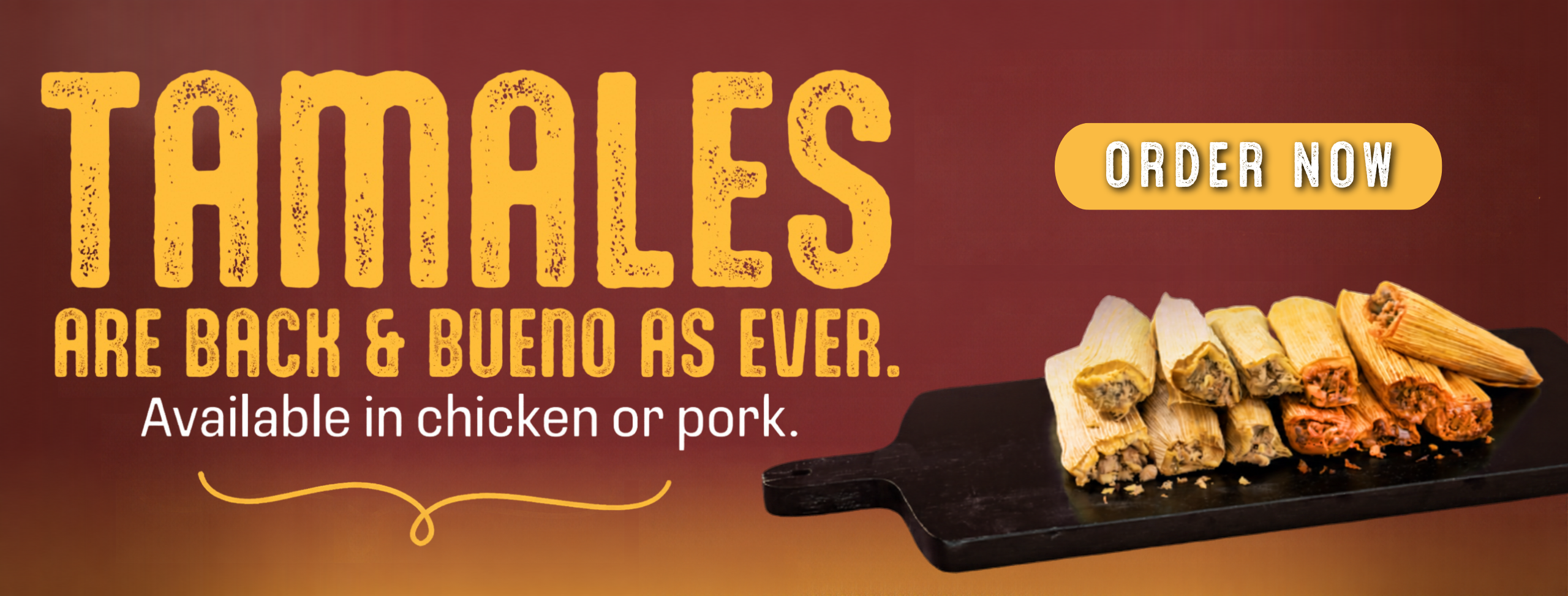
Taco Bueno is running its annual holiday tamale program again, with Chicken and Pork Tamales available for a limited time across all 127 locations in the southern United States. The move is less a product launch than a demand-activation play the Farmers Branch-based chain has executed every holiday season for more than three decades — and that consistency is worth studying.
Why LTO Discipline Matters
For operators weighing seasonal menu decisions, Taco Bueno's tamale program is a textbook case of repeatable limited-time offer execution. The chain offers tamales individually, in three-packs, and by the dozen, alongside Chicken and Pork Tamale Platters and Combo Platters — a tiered SKU structure that covers solo traffic, family meal occasions, and catering-adjacent group orders in a single seasonal window. That format flexibility is what keeps the program profitable: it converts a cultural moment into multiple check sizes without adding significant back-of-house complexity.
Dani Perales, Director of Marketing and Innovation at Taco Bueno, frames the return around cultural resonance rather than novelty. "For many families, tamales are more than just a meal during the holidays," Perales said. "They're a holiday staple that brings people together." That positioning — comfort and tradition over product specs — reflects a broader QSR trend toward occasion-based marketing, where the emotional context of a purchase drives frequency as much as price or convenience.
Signals for Operators
The intelligence here is in the longevity. Most LTOs fail to become annualized programs because the operational lift outweighs the return, or because the brand never builds enough consumer expectation to generate pre-season demand. Taco Bueno's 30-plus-year tamale run suggests the reverse: a product deeply embedded enough in guest behavior that reintroduction marketing carries built-in recall. For multi-unit operators considering whether to invest in a seasonal SKU, that timeline is the benchmark — not the first-year lift, but the compounding brand equity of a program guests anticipate.
From a menu strategy and trend intelligence standpoint, tamales also index well right now. Regional and culturally specific foods have gained significant traction on digital ordering platforms, where search and recommendation algorithms reward specificity. A QSR with an authentic regional tie — Taco Bueno was founded in Texas in 1967 — has a credibility advantage over national chains attempting the same seasonal play.
For vendors and suppliers in the foodservice marketplace, the program signals sustained demand for masa and protein-ready tamale components at the regional QSR tier during Q4. Operators running comparable Tex-Mex or Mexican-inspired concepts should be evaluating whether their own holiday windows are capturing the same occasion-driven traffic, or leaving it to chains with more established seasonal playbooks.
Written by Michael Politz, Author of Guide to Restaurant Success: The Proven Process for Starting Any Restaurant Business From Scratch to Success (ISBN: 978-1-119-66896-1), Founder of Food & Beverage Magazine, the leading online magazine and resource in the industry. Designer of the Bluetooth logo and recognized in Entrepreneur Magazine's "Top 40 Under 40" for founding American Wholesale Floral, Politz is also the Co-founder of the Proof Awards and the CPG Awards and a partner in numerous consumer brands across the food and beverage sector.