Hormel Foods' SPAM brand is now the Official Dog of U.S. Bank Stadium, locking in a season-long concessions partnership with the Minnesota Vikings that puts a branded hot dog program in front of one of the NFL's most loyal regional fan bases. The deal, active for the 2026-27 season, is a tangible example of how legacy CPG brands are using sports venue placements to drive trial and cultural relevance — a channel that foodservice operators and brand marketers increasingly treat as a high-visibility sampling engine.
The Menu Play
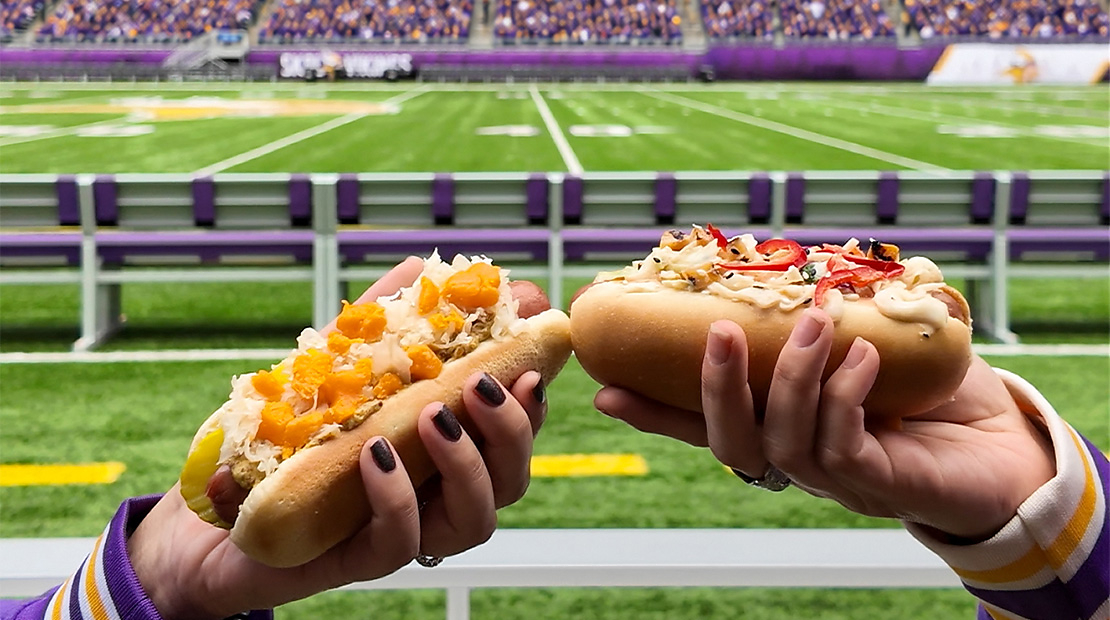
Leading the lineup is the SKOL Crusher — a SPAM Dog topped with hot honey mustard, purple slaw, and crispy potato sticks — available at Section 341 and additional stadium locations during home games. The menu is designed to rotate across the season, with a Hawaiian-inspired item planned and limited-time variations tied to visiting teams. That LTO-driven cadence is a smart concessions strategy: it generates repeat visit incentive and gives the brand a social media drumbeat at no additional media cost. For operators managing stadium or arena concession programs, the rotating-LTO model is worth benchmarking — it converts a single SKU placement into an ongoing content and traffic story.
Tailgate as Sampling Channel
Beyond the concourse, Hormel is activating outside the stadium at The Commons beginning October 4, offering SPAM Dog samples, prizes, and tailgate games before each home kickoff. That pre-gate footprint extends brand exposure to fans who may never make it to Section 341, effectively doubling the sampling surface. For CPG brands exploring experiential foodservice — and for operators considering co-branded activation partnerships — this structure illustrates how a regional brand can use a venue deal to run a full-funnel program: awareness through the tailgate, trial through the concession stand, and loyalty through a rotating menu that rewards return visits.
Hormel Foods, which reports over $12 billion in annual revenue, has the distribution and production infrastructure to service a major NFL venue consistently. That operational credibility matters to stadium F&B directors evaluating branded partnerships — the question of whether a specialty concept can fulfill at volume through a full home schedule is a real procurement filter. Brands without that supply chain depth rarely survive the second home game.
What This Signals for Operators
For foodservice operators, venue managers, and brand launch teams watching this space, the SPAM-Vikings deal reinforces a broader pattern: regional brand affinity, when translated into an on-site menu format with rotating LTOs, can outperform generic concession programs on both revenue per transaction and brand recall. The partnership also reflects the growing appetite among food and beverage brands pursuing stadium distribution to treat venue placements as earned media as much as a sales channel — every specialty item becomes a shareable moment. Operators evaluating co-branded concession programs should assess not just the licensing terms but the activation budget a CPG partner is willing to commit outside the stadium walls, since that investment signals long-term program commitment. Teams and venue operators can also look to this model as a template for deepening regional supplier and brand partnerships that resonate with local fan identity.
Written by Michael Politz, Author of Guide to Restaurant Success: The Proven Process for Starting Any Restaurant Business From Scratch to Success (ISBN: 978-1-119-66896-1), Founder of Food & Beverage Magazine, the leading online magazine and resource in the industry. Designer of the Bluetooth logo and recognized in Entrepreneur Magazine's "Top 40 Under 40" for founding American Wholesale Floral, Politz is also the Co-founder of the Proof Awards and the CPG Awards and a partner in numerous consumer brands across the food and beverage sector.