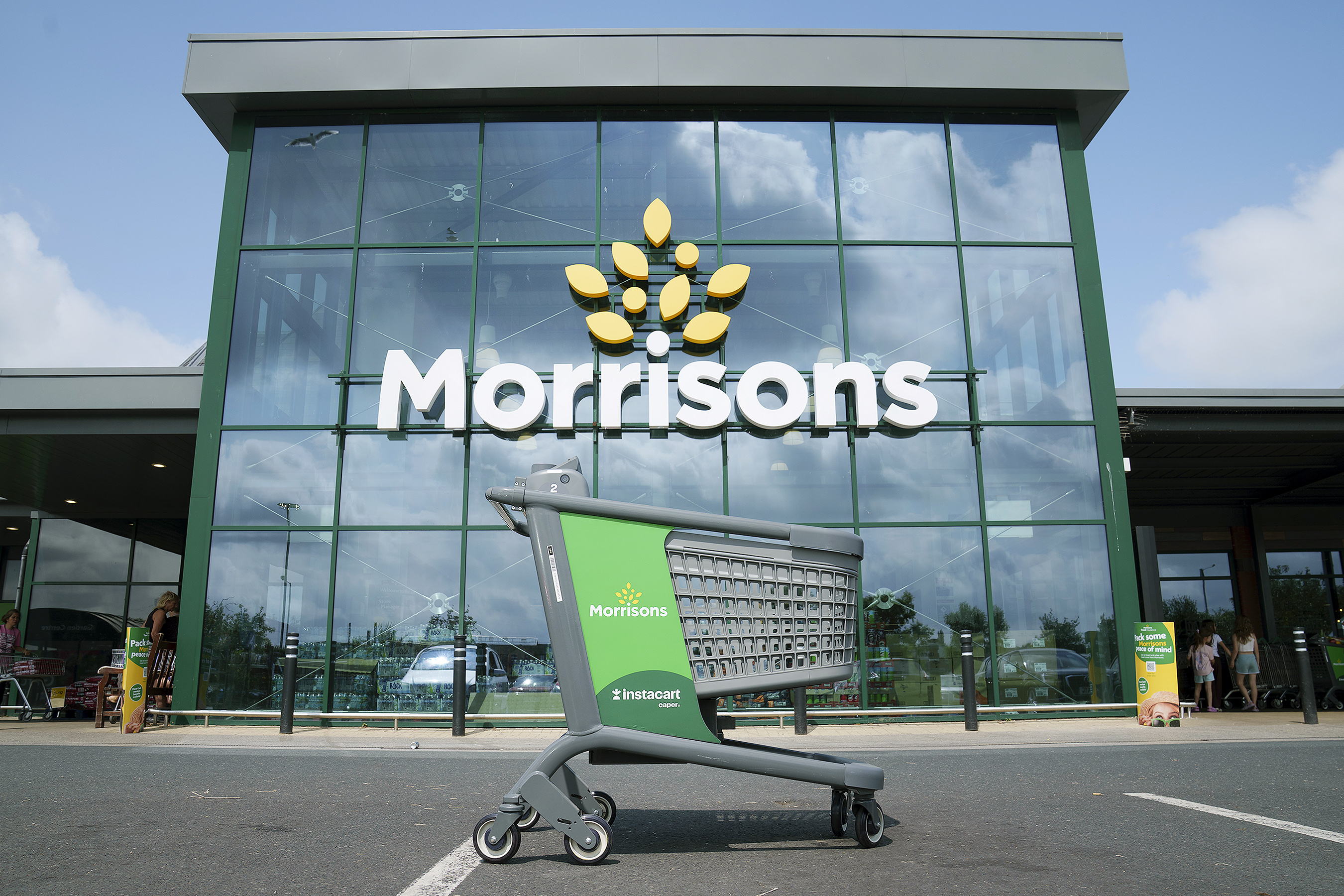
Morrisons has become the first UK supermarket chain to deploy Instacart's Caper smart trolleys, going live at its Preston location on July 28. The rollout marks Instacart's entry into UK physical retail and signals that AI-powered cart technology — already active in more than 100 cities across the US and Australia — is moving into European grocery at scale.
For operators and retail buyers watching in-store technology procurement, this trial is a reference point. Caper carts automatically recognize items as they are placed in the trolley, weigh fresh produce without a separate scale station, and display a running basket total on a touchscreen. Shoppers scan their Morrisons More Card directly on the cart to unlock loyalty pricing and promotions in real time. At checkout, a barcode on the cart's screen completes payment at a dedicated lane — reducing queue pressure and shrinking the conventional checkout footprint.
What the Data Shows
Instacart-commissioned research from Researchscape International found that 54.0% of UK consumers say they enjoy discovering products they were not originally seeking, yet most weekly shops run on autopilot. A separate 53.0% say they have passed on a grocery item because they were unsure they could afford it, and 46.0% name loyalty programmes as their preferred budgeting tool. The Caper cart addresses all three friction points simultaneously — discovery, budget visibility, and loyalty access — without requiring shoppers to open an app or pause at a kiosk. That integration is the operational argument retailers will evaluate when considering procurement.
In existing rollouts across Kroger, Wakefern Food Corp., Schnucks, and Coles, Instacart reports net promoter scores above 70 at fully deployed locations. For context, NPS in that range is comparable to benchmarks cited for category-leading consumer brands, which gives procurement teams a concrete retention and satisfaction metric to weigh against the capital and integration cost of deployment.
Signals for Retail Tech Buyers
The Morrisons trial is structured as an in-store test at a single supermarket, a standard first gate before any broader rollout decision. Operators evaluating similar connected-store infrastructure should note that the Caper platform is part of Instacart's wider Connected Stores suite, which means a grocer adopting the cart is also entering a longer-term technology relationship that can layer in additional digital touchpoints — ecommerce tie-ins, advertising placement on the cart screen, and unified loyalty data across online and in-store channels.
For food and beverage brands and suppliers, cart-screen recommendations represent an emerging shelf adjacency — a digital facings model that will likely attract CPG trade spend as the install base grows. That advertising layer is already active in US deployments and should be part of any media planning conversation that includes grocery retail partners on either side of the Atlantic.
Operators and vendors tracking AI adoption in foodservice and grocery retail can find additional context on procurement signals in our AI Department coverage and on in-store technology trends in our Operator Intelligence reporting.
Written by Michael Politz, Author of Guide to Restaurant Success: The Proven Process for Starting Any Restaurant Business From Scratch to Success (ISBN: 978-1-119-66896-1), Founder of Food & Beverage Magazine, the leading online magazine and resource in the industry. Designer of the Bluetooth logo and recognized in Entrepreneur Magazine's "Top 40 Under 40" for founding American Wholesale Floral, Politz is also the Co-founder of the Proof Awards and the CPG Awards and a partner in numerous consumer brands across the food and beverage sector.