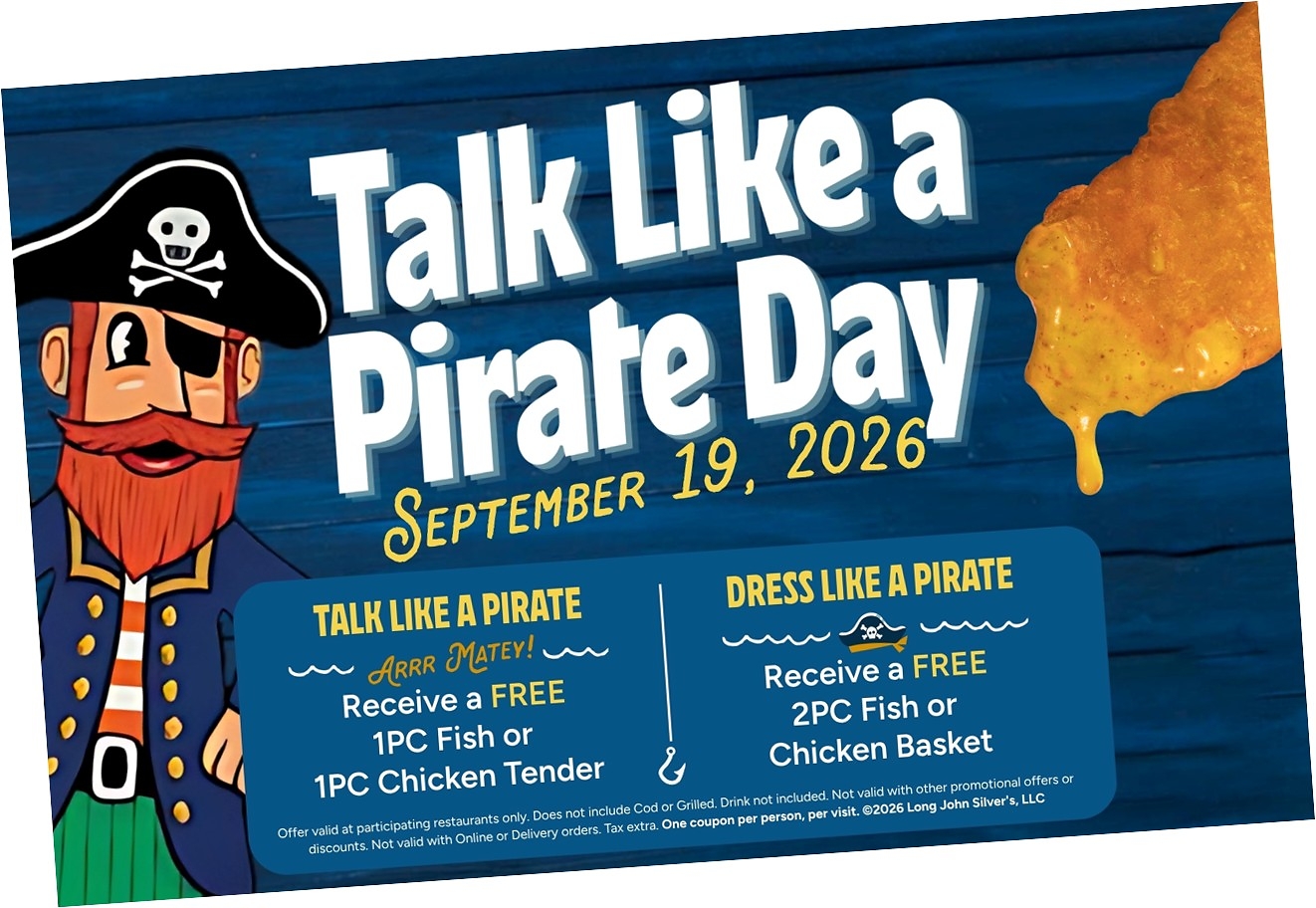
Long John Silver's is converting a quirky calendar moment into a structured, two-tier promotional engine on September 19, Talk Like a Pirate Day. Guests who talk like a pirate at participating locations receive a free piece of the chain's signature hand-battered fish or a Chicken Plank — no purchase required. Those who arrive in costume unlock a bigger reward: a free two-piece fish or chicken basket. Temporary pirate-themed tattoos (three designs, while supplies last) sweeten the in-store experience. For QSR operators watching guest-count metrics, this is a textbook case of tiered participation mechanics designed to raise both visit frequency and dwell time.
The Loyalty Layer
The promotion doesn't stop at the counter. Long John Silver's uses the event to funnel traffic toward its Seacret Society™ Rewards program, nudging first-time or lapsed guests toward a loyalty relationship with the brand. That loyalty integration is increasingly standard practice in QSR promotions — chains that attach a rewards call-to-action to a high-traffic event tend to see measurable enrollment spikes in the days immediately following. For operators considering how to structure their own limited-time offers, the dual-tier mechanic (voice participation vs. costume participation) is worth studying: it sets a low floor for entry while creating a higher-value incentive that rewards extra effort, extending average ticket engagement without requiring a discount on purchased items.
What Operators Should Take From This
Calendar-based promotions like Talk Like a Pirate Day succeed when the participation mechanic is frictionless and the reward is concrete. Long John Silver's has run this event across multiple years — Laura Ellis, chief marketing officer at Long John Silver's, notes that guests arrive ready to engage, suggesting the brand has built genuine consumer expectation around the date. That earned anticipation is a significant media efficiency advantage: organic social content, word-of-mouth, and repeat participation reduce the paid-media load needed to drive awareness. Operators without the brand equity to generate that kind of earned buzz should look at how they're building event-based traditions into their annual promotional calendar — and whether their loyalty program is positioned to capture the data those moments generate.
For agencies and growth teams managing QSR or fast-casual accounts, the structural lesson here connects directly to geo-fencing and local campaign tactics that can amplify in-store events in specific trade areas. Pairing a time-sensitive in-store mechanic with hyper-local digital promotion — targeted social, SMS to loyalty members, location-based push notifications — is where promotional lift becomes measurable and attributable. Separately, operators evaluating how to build loyalty program depth around event moments can find relevant benchmarks in QSR loyalty program trend coverage that tracks enrollment patterns around promotional windows.
The broader signal here for foodservice operators: in a category where digital promotions and delivery aggregators have trained guests to expect discounts, in-restaurant behavioral mechanics that reward presence and participation — rather than simply price — are a differentiated play. Long John Silver's has found a repeatable format that drives foot traffic, generates social content, and feeds its loyalty funnel simultaneously, without eroding perceived menu value.
Written by Michael Politz, Author of Guide to Restaurant Success: The Proven Process for Starting Any Restaurant Business From Scratch to Success (ISBN: 978-1-119-66896-1), Founder of Food & Beverage Magazine, the leading online magazine and resource in the industry. Designer of the Bluetooth logo and recognized in Entrepreneur Magazine's "Top 40 Under 40" for founding American Wholesale Floral, Politz is also the Co-founder of the Proof Awards and the CPG Awards and a partner in numerous consumer brands across the food and beverage sector.