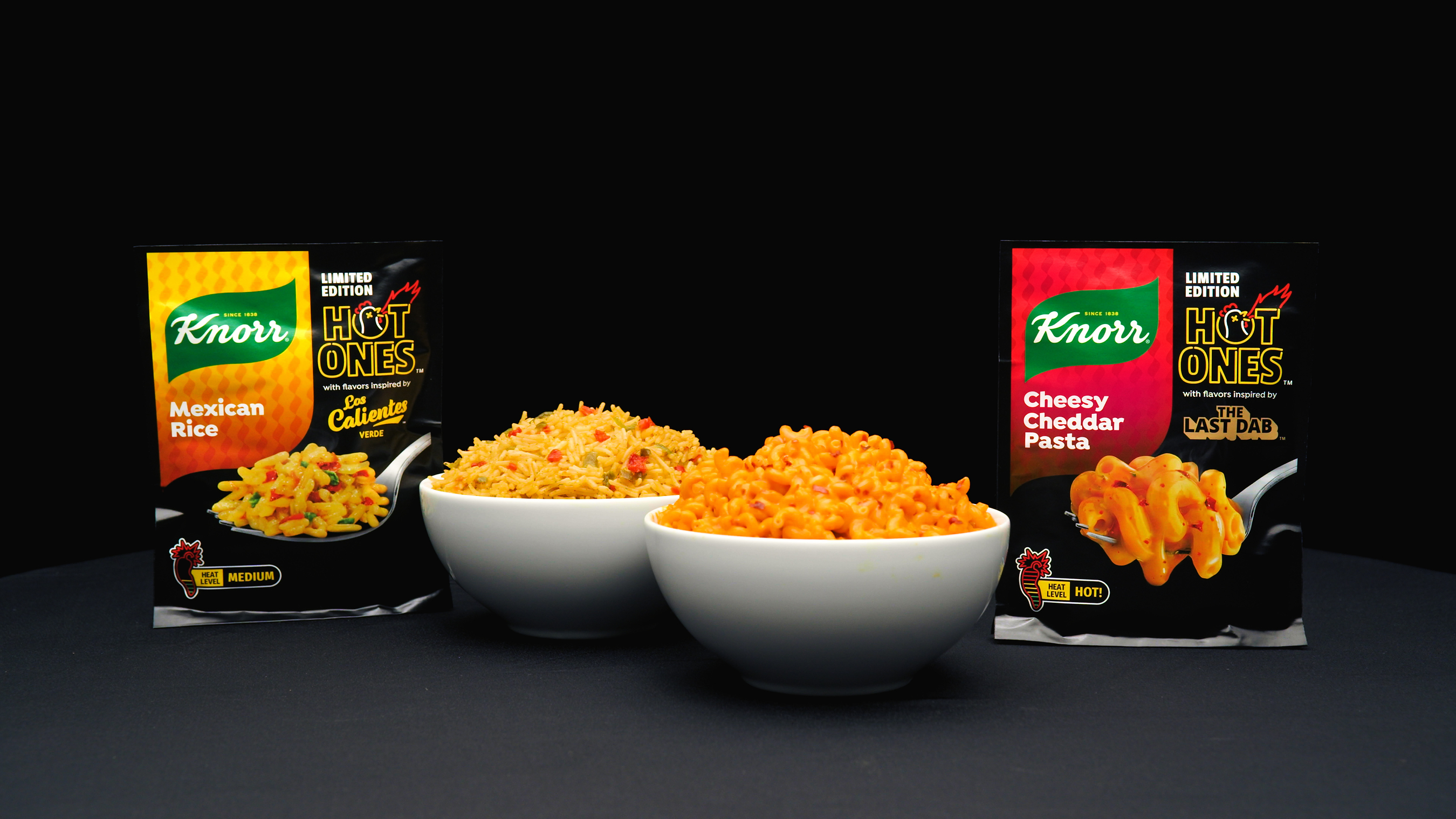
Two new Knorr SKUs hit Amazon on September 9 — a Mexican Rice tied to Hot Ones' Los Calientes Verde sauce profile and a Cheesy Cheddar Pasta keyed to The Last Dab — marking the deepest product-level integration yet between Knorr and First We Feast's flagship show. For foodservice and grocery operators watching how branded media partnerships are reshaping the ambient/pantry aisle, this launch is worth a close read.
The Mechanics of the Drop
Both SKUs are Amazon-exclusive at launch, priced in three tiers: $8.99 for a three-pack of a single flavor, $9.99 for a mixed four-pack, and $14.99 for an eight-pack. That pricing architecture is deliberate — it drives trial at the lower end while pushing basket size through the bundle. The Amazon-first strategy also gives Knorr clean sell-through data before any potential brick-and-mortar expansion, a model more CPG brands are piloting as DTC intelligence feeds retail buyer conversations.
The timing is anchored to a new Hot Ones episode airing September 14, where an unnamed guest tests the actual products on camera. That episode functions as a long-form, high-credibility piece of content marketing — one that Knorr doesn't have to pay to produce and that reaches an audience Circana data shows is already primed: 93.0% of Americans self-identify as hot sauce fans, and more than half reach for it weekly.
What This Signals for Operators and Brand Teams
This launch is less about rice and pasta and more about a replicable framework. Knorr is using Hot Ones not as a celebrity endorser but as a flavor-translation partner — mapping established sauce profiles (Los Calientes Verde, The Last Dab) onto shelf-stable meal kits to give consumers a flavor reference point they already trust. For brand launch teams and operators building private-label or co-branded SKUs, that's a meaningful distinction. The IP does the flavor storytelling; the brand delivers the execution.
Melanie Cappella, Knorr's Chief Growth Officer, framed it plainly: "Delicious food brings people together, and with this collaboration we're bringing the rich flavor people expect from Knorr and the iconic heat Hot Ones fans love, making it easy to bring more excitement to the table." Melanie Baker, Director of Marketing for Hot Ones, echoed the mutual-authentication logic — each brand validates the other's core promise to the consumer.
For operators and buyers tracking ambient pantry trends, this also connects to the ongoing "dump and bake" wave on TikTok, which Knorr explicitly calls out in its positioning. Shelf-stable sides that plug into one-pan, social-media-native cooking formats are outperforming traditional recipe-card-style meal kits in digital discovery. Brands that can credibly live inside that format — and that have an entertainment partner to amplify reach — are compressing the awareness-to-purchase funnel significantly.
Buyers evaluating new SKUs for grocery or food-and-beverage retail programs should note how First We Feast's 15 million YouTube subscribers and 3 billion cumulative views effectively function as a pre-qualified customer list. The show has previously partnered with Shake Shack and Pringles, suggesting an established licensing and co-development process that more food brands should be benchmarking. For teams developing media-driven brand launch packages and retail buyer decks, the Hot Ones model — content anchor plus limited DTC drop plus episode tie-in — is increasingly the template to study.
Written by Michael Politz, Author of Guide to Restaurant Success: The Proven Process for Starting Any Restaurant Business From Scratch to Success (ISBN: 978-1-119-66896-1), Founder of Food & Beverage Magazine, the leading online magazine and resource in the industry. Designer of the Bluetooth logo and recognized in Entrepreneur Magazine's "Top 40 Under 40" for founding American Wholesale Floral, Politz is also the Co-founder of the Proof Awards and the CPG Awards and a partner in numerous consumer brands across the food and beverage sector.