Jollibee opens its downtown San Francisco location on July 31, 2026, at 934 Market Street — one block from the Powell Street BART station — marking the brand's most central urban foothold in a region where it has operated since 1998. For operators and franchise investors tracking high-volume QSR concepts, the timing matters: the opening accompanies a formal North American Franchising Program that already carries multi-unit commitments in Nevada, New York, Texas, and Washington.
The Unit Economics Case
The number operators will want to benchmark is $4.9 million in average unit volume — a figure Jollibee cites for its North American stores, which the company says is approximately 2.5 times the QSR industry average. That spread is what drives franchise inquiry pipelines, and it gives the brand credible leverage when competing for real estate and franchisee capital against more established domestic chains. Beth Dela Cruz, President of Jollibee North America, framed the downtown San Francisco unit as a California acceleration play, with locations in Oxnard and Elk Grove scheduled to follow in coming months, bringing the state count higher still.
Bay Area as a Strategic Proof Market
With 13 existing Bay Area locations before this opening, Jollibee is not testing a market — it is densifying one. That distinction matters for vendors, distributors, and packaging suppliers who track where QSR brands are building supply-chain density versus where they are planting single exploratory flags. The brand's partnership with the Golden State Warriors, including fan activations planned across the 2026–2027 home schedule, also signals a sports-marketing layer that regional media buyers and experiential agencies should note.
On the national recognition side, USA TODAY named Jollibee the best fast-food fried chicken in America for the third consecutive year in July 2026, and parent company Jollibee Foods Corporation landed on both the TIME100 Most Influential Companies list and the inaugural TIME100 Companies Industry Leaders in Food & Drink top-10 shortlist this year. That kind of earned-media momentum reduces paid acquisition costs at launch — a dynamic worth modeling if you are advising a competing brand on brand launch strategy in dense urban corridors.
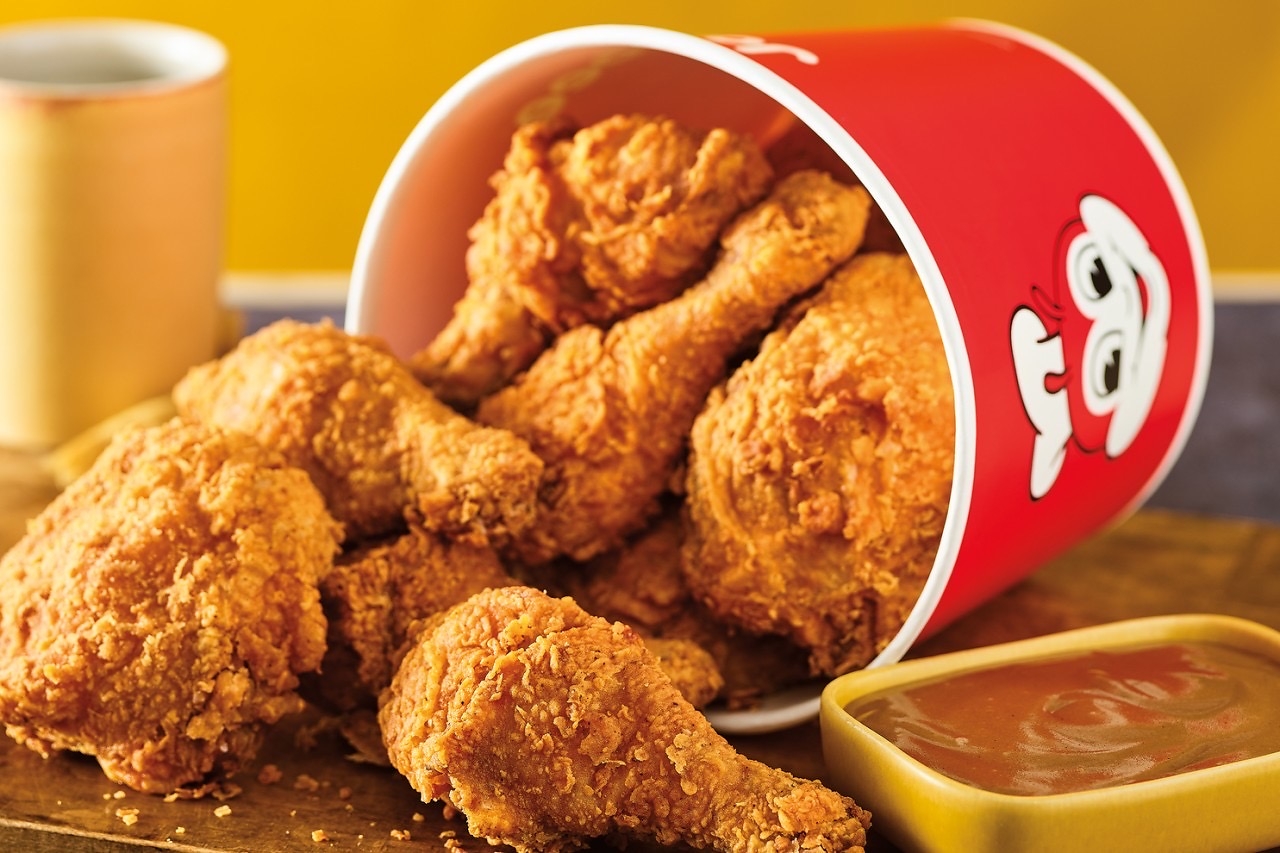
For operators evaluating competitive pressure, Jollibee's opening playbook — three days of giveaways, with the first 100 in-store customers on Day 1 receiving one year of free Chickenjoy (one 6-piece bucket per month for 12 months) — is a deliberate loyalty-capture mechanism at scale. The brand is not just driving opening-week traffic; it is enrolling guests into a repeat-visit cadence from day one, a tactic that pairs directly with its Jollibee Rewards loyalty program. Operators building their own loyalty and CRM programs should study the mechanics: high-perceived-value prizes, a defined time window, and a clear digital opt-in path.
The broader signal here is geographic sequencing. Jollibee's Bay Area saturation strategy — begin in an immigrant-dense suburb, build brand equity over two decades, then enter the downtown urban core — offers a replicable market-entry template for any international QSR concept targeting the U.S. The franchising program's traction in multiple states simultaneously suggests the brand is shifting from opportunistic growth to a structured development pipeline, which changes the procurement, supply-chain, and real-estate calculus for every operator in its competitive set.
Written by Michael Politz, Author of Guide to Restaurant Success: The Proven Process for Starting Any Restaurant Business From Scratch to Success (ISBN: 978-1-119-66896-1), Founder of Food & Beverage Magazine, the leading online magazine and resource in the industry. Designer of the Bluetooth logo and recognized in Entrepreneur Magazine's "Top 40 Under 40" for founding American Wholesale Floral, Politz is also the Co-founder of the Proof Awards and the CPG Awards and a partner in numerous consumer brands across the food and beverage sector.