The Launch
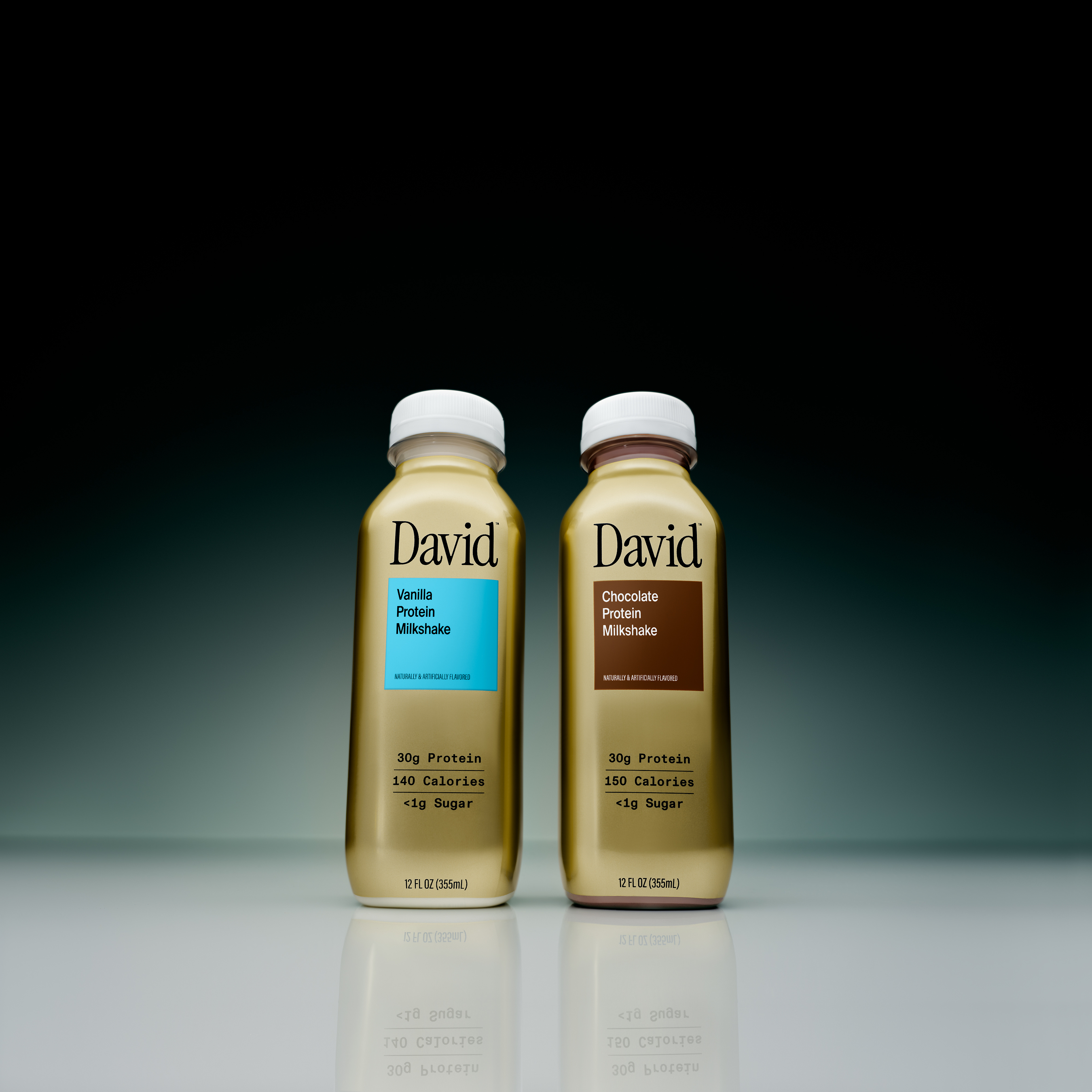
David Protein entered the ready-to-drink category on September 8 with the release of its Protein Milkshakes in Vanilla and Chocolate — two 12 oz ultrafiltered-milk formats delivering 30g of protein, 140–150 calories, and less than 1g of sugar. The product is live at davidprotein.com and seeded into select New York City retail doors, following the brand's June introduction of a frozen dessert pint with comparable macro credentials.
For operators and retail buyers watching the high-protein beverage shelf, the numbers are competitive. Thirty grams of protein at 140 calories in a milkshake format is a profile that most RTD incumbents — including legacy brands built on whey isolate and artificial sweeteners — have struggled to achieve without either spiking calorie count or compromising texture. The ultrafiltered milk base is the same technology underpinning brands like Fairlife, and it gives David a clean-label story alongside the macro density.
Campaign and Distribution
The launch is backed by "Drink David," a campaign featuring supermodel Stella Maxwell shot against the brand's signature gold bottle aesthetic. Out-of-home placements are running across New York City this month alongside digital and social activations. The fashion-adjacent creative direction is a deliberate positioning signal: David is building at the intersection of performance nutrition and lifestyle culture, not purely in the sports-supplement aisle.
That distinction matters for foodservice and specialty retail buyers evaluating placement. A brand actively pulling toward fashion, beauty, and culture audiences tends to land differently on-shelf — and differently in terms of which hotel grab-and-go, fitness-club, or boutique grocery account it fits — than a conventional protein play. Operators sourcing RTD beverages for upscale gym lounges, hotel fitness centers, or health-focused café programs should note that the gold bottle and campaign creative are built for a certain premium shelf aesthetic.
What It Signals for Buyers
David's portfolio trajectory is worth mapping. In less than a year, the brand has moved from bars (Gold at 28g protein for 150 calories; Bronze at 20g for 150 calories) to frozen dessert to RTD beverages. That velocity suggests a brand in active distribution expansion mode — and a supplier worth getting in front of before regional and national distribution footprint solidifies.
For operators building out beverage and functional-drink programs, the RTD protein milkshake segment is crowded but still unresolved at the premium end. Most units competing here are either nutritionally modest or rely heavily on sweeteners to hit palatability. A product that legitimately clears 30g of protein under 150 calories in a milkshake texture — if it delivers on taste — has a credible argument for premium placement and a higher retail price point than category averages.
Brands executing this kind of format-extension strategy with consistent macro benchmarks across every SKU are also the ones retail buyers and distributors tend to prioritize during line review season. David's consistency — 28–30g of protein at 140–150 calories across bars, frozen, and now RTD — reads as a coherent brand architecture, not a scattered portfolio.
Written by Michael Politz, Author of Guide to Restaurant Success: The Proven Process for Starting Any Restaurant Business From Scratch to Success (ISBN: 978-1-119-66896-1), Founder of Food & Beverage Magazine, the leading online magazine and resource in the industry. Designer of the Bluetooth logo and recognized in Entrepreneur Magazine's "Top 40 Under 40" for founding American Wholesale Floral, Politz is also the Co-founder of the Proof Awards and the CPG Awards and a partner in numerous consumer brands across the food and beverage sector.