The Move
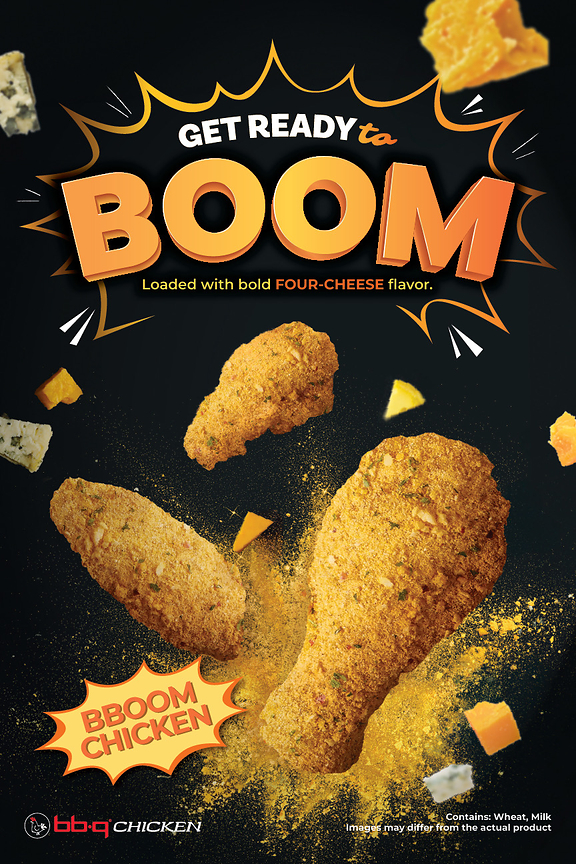
bb.q Chicken is rolling BBoom Chicken into all U.S. locations on September 9 — a crispy Korean fried chicken coated in a four-cheese seasoning blend combining gouda, cheddar, parmesan, and blue cheese. The SKU is not a regional test or a limited-time offer; it is a full systemwide launch on day one, which signals a high level of franchisee buy-in and supply-chain readiness across the U.S. network.
The flavor is not new to the brand. BBoom Chicken launched in Korea in 2025 and sold 1 million units in its first 100 days — a velocity benchmark that gave the brand the confidence to bring it stateside with minimal menu risk. For operators watching how global QSR and fast-casual chains manage product pipelines, that kind of proven demand data before a U.S. rollout is worth noting. It reduces promotional spend uncertainty and gives franchisees a story to tell consumers before the first order is placed.
Why Operators Should Watch This
The cheese-forward flavor profile is a deliberate read on U.S. consumer behavior. American appetite for cheese-seasoned snacks and chicken formats has been well-documented across convenience, QSR, and retail for several years. bb.q is threading Korean fried chicken technique — known for its double-fry process and lighter, crispier coating — through a flavor profile that already has broad mainstream familiarity. That crossover positioning is a repeatable playbook for any brand moving from an ethnic-cuisine niche into wider foodservice distribution.
The launch is also paired with a free-delivery promotion on all online and mobile app orders, which serves two functions: it pushes consumers toward owned digital channels rather than third-party aggregators, and it builds first-party order data around a new menu item. Operators running their own loyalty or app infrastructure will recognize that a free-delivery window tied to a product launch is a low-cost acquisition tool for digital order habits. The brand is anchoring a weeklong in-person event at its New York City K-Town location from September 9–15, featuring sampling, activities, and giveaways — a smart way to generate local press and social content without a large media budget.
What This Signals
bb.q's trajectory in the U.S. has been consistent. The brand earned recognition from YouGov as the No. 7 Emerging Dining Brand and from Yelp as the No. 3 Most Loved Brand and No. 7 fastest-growing brand in the restaurant sector. Restaurant Business Magazine placed it among the fastest-growing chains in the U.S. That kind of third-party validation matters to prospective franchisees evaluating where to put capital, and it matters to distributors and packaging vendors assessing whether a brand has the unit economics to scale.
For vendors, agencies, and suppliers in the brand launch space, the BBoom rollout is a case study in sequencing: prove the product in the home market, capture a demand metric that travels well (1 million units in 100 days), then localize the messaging around a flavor bridge consumers already understand. The free-delivery and birthday-event mechanics layer on activation without requiring a national media buy. Operators benchmarking their own menu and beverage trends against competitive set moves should log this as a data point on how Korean fried chicken brands are moving from trend status to mainstream systemwide menu management.
Written by Michael Politz, Author of Guide to Restaurant Success: The Proven Process for Starting Any Restaurant Business From Scratch to Success (ISBN: 978-1-119-66896-1), Founder of Food & Beverage Magazine, the leading online magazine and resource in the industry. Designer of the Bluetooth logo and recognized in Entrepreneur Magazine's "Top 40 Under 40" for founding American Wholesale Floral, Politz is also the Co-founder of the Proof Awards and the CPG Awards and a partner in numerous consumer brands across the food and beverage sector.